|
By Xin Wen Days ago I had a little conversation with my cousin, and this conversation armed me with an unprecedented sense of pride—as a student of liberal arts, for the first time, I felt I’ve actually learned something. The conversation started with a question my cousin asked me: “why does a relatively old lady can hardly be considered as ‘attractive’ but a relatively old man can still be ‘attractive’? For example, Meryl Streep is still glamorous, but Harrison Ford is attractive.” I replied: “That’s because we were born into a patriarchal society—Men control political power and social wealth. In this culture, young beauties are shopping-rush goods. So when faced with a youthful body a man will never consider an old lady beautiful. He may think she is elegant, but definitely, not beautiful.” My cousin asked with puzzle: “but we are women right? Why do we think old ladies unattractive too?” I said: “that’s because we—women are born into this culture as well. We can’t totally resist the impact of cultural products all around us.” So when I came across the decorations and make-up of adolescents from Surma and Mursi tribes, I was surprised. I am glad to know that there is still people living-- whose aesthetic standards are not affected by our modern society. Even today some African tribe people are born into their own culture, and grow their own criterion toward beauty. I am glad since I believe difference is all that matters. If all the cities become New York, there is no point travelling. If all women dress like the latest Vogue cover girl, there is no ‘good taste’ at all. Umberto Eco said in <History of Beauty> that ‘The idea of Beauty is not only relative to diverse historical epochs. Diverse aesthetic ideals may coexist even in the same period, and even in the same country.’ 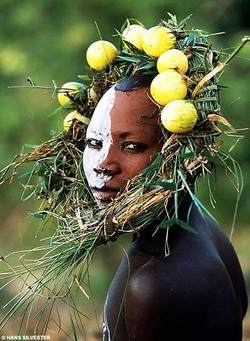 A photographer named Hans Silvester in the book <Natural Fashion: Tribal Decoration from Africa> provides us with amazing pictures of young Surma and Mursi people. It’s unbelievable that these people made all their decorations with materials they can find easily: leaves, twigs, flowers, fruits, white clay pot, etc. It’s more unbelievable if you take their reserve of make-up devices into consideration: they don’t have mirrors—they create these beautiful decorations without the aid of mirrors! If you think the beautiful decorations of them indicate a very joyful culture, then you are definitely wrong. Young children in Surma and Mursi tribes are used to getting scars. The more scars one has, the more courage he/she possesses. Some anthropologists indicate that this is a kind of training—preparing for danger and bloody fight in the future. Once adolescents are mature enough to get married, for males, what lies before them is the fiercest fight—stick fighting. (Some young people use guns these days) and for females, lip plates are a necessary. Cattle is the most important commodity in the Surma and Mursi tribes. It is said that “every boy is given a young bull to look after, and his friend call him the name of the bull.” Surma and Mursi people inhabit in the Omo valley of Ethiopia, which locates in the area bordering Ethiopia, Kenya, and Sudan. Visitors rarely tour this area because it’s too far and the culture is different from other parts of Ethiopia. Recently because of the building of a national park and the wars in Sudan, Surma and Mursi people were evicted and displaced. On one hand they are forced to fight with enemy tribes who moved to their land because of war; on the other hand, they have to sign on papers which indicate they are the illegal residents on their own land. Look at these beautiful young faces; can you imagine the hardship and cruelty in their upcoming lives? I can’t and I know there is not very much I can do to help. 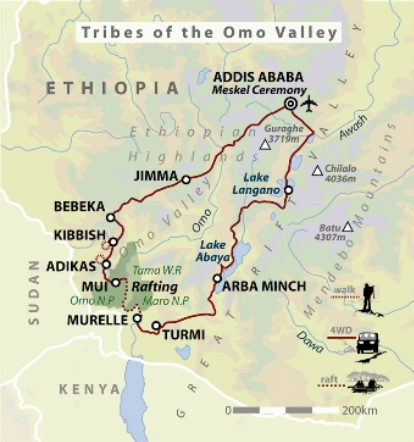 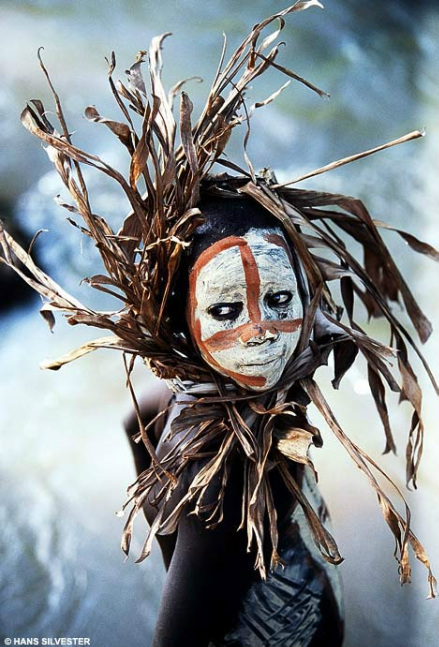 References:
http://www.monstrous.com/Monstrous_Literature/Natural_Fashion_Tribal_Decoration_from_Africa_by_Hans_Silvester.html http://en.wikipedia.org/wiki/Surma_people http://www.bbc.co.uk/tribe/tribes/suri/ http://en.wikipedia.org/wiki/Omo_River Pictures come from: http://www.monstrous.com/Monstrous_Literature/Natural_Fashion_Tribal_Decoration_from_Africa_by_Hans_Silvester.html and http://www. wildfrontiers.co.uk |
Archives
June 2017
Categories
All
|
 RSS Feed