|
The 1988 film is enshrouded by a classical music score that inspires a sense of danger and wonder. A woman's hand holds a letter with 18th century styled writing. The laced arm of a noble rises from underneath bountiful and silky bed covers, to reach for a handkerchief from a waiting tray as another servant brings forth a steaming hot drink. A hoop skirt is put into place. And so commences the toilette for two nobles, the Vicomte de Valmont and the Marquise de Merteuil. Perfumes, corsets, wigs, shoes, powder, among other details must be founded upon and strictly adhered to. 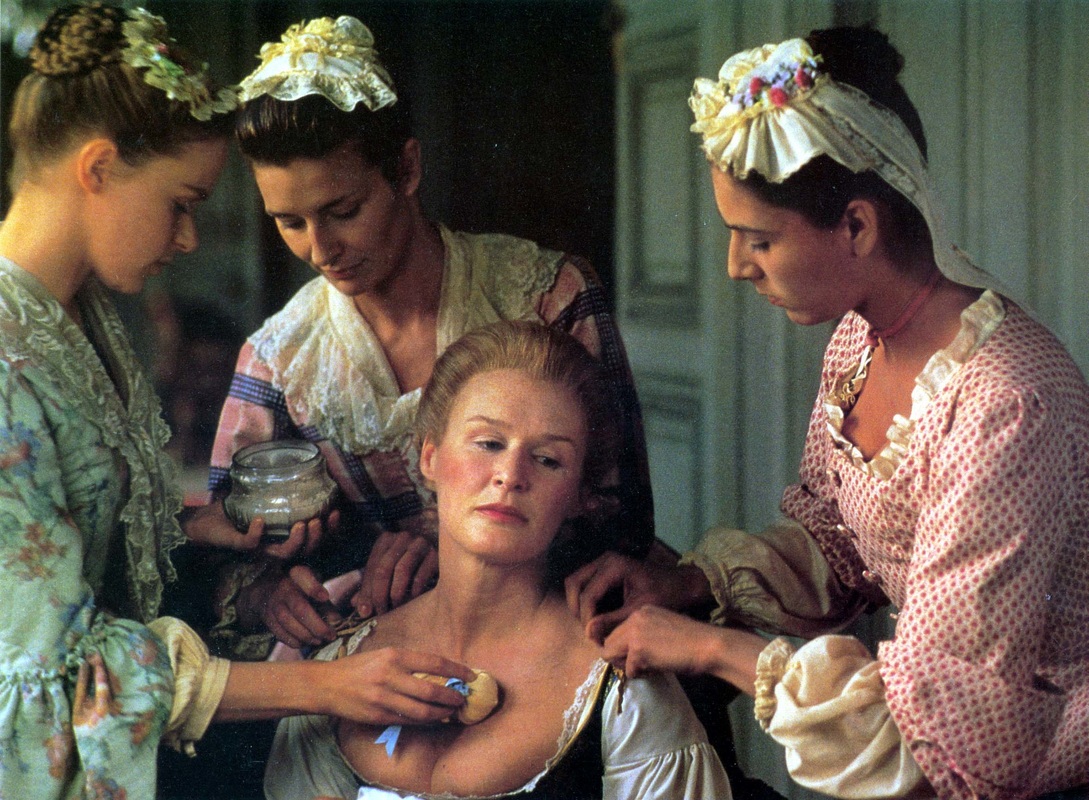 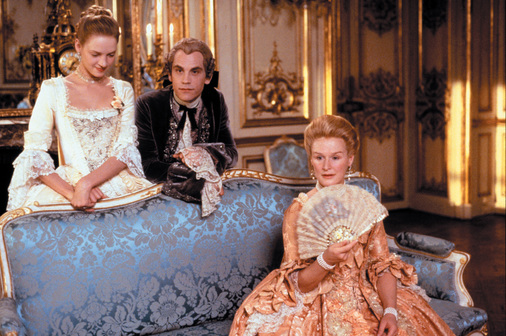 The innocent Cecile de Volanges and her watchful hen of a mother are at a visit to the Marquise. The budding daughter has recently come from a convent where she lived and was educated. A servant enters with a note upon a tray. It is to announce the arrival of Valmont. Madame de Volanges warns Cecile, who is dressed in white, while she and the Marquise sit as the daughter stands in a near servant like pose, that Valmont does not open his mouth unless he first calculates the damage he may do and all of this is part of a conspicuous charm. Cecile inquires as to why he is then received. Her mother comments that everyone receives him. Valmont enters with the strolling grace of a cat only to bow and give a calculated smile. The costumes are sublime though the jewelry looks as if it could be fake. And the puns begin as soon as sex enters the air which is immediately. Valmont stands next to Cecile and leans so that he is in direct lines eye with her breasts. Madame de Volanges states it is best that they leave and Cecile remarks, "I'm used to being in bed by nine at the convent." "So, I should hope," the experienced Valmont replies. The Marquise rings a bell for a servant to see to their exit. And once the two are alone, the plotting begins. Both are hardened ends to the same crooked stick. The Marquise asks Valmont if he wonders why he was summoned there that evening. He replies that he hoped it would be for the pleasure of his company. She says she needs something from him. And that is to seduce Cecile as the girl's future husband is the Marquise's old lover who left her for Valmont's fat mistress. But Valmont does not wish to ruin Cecile's life as he had other prey in mind. Madame de Tourvel is married and virtuous. Why not take her for a spin? The Marquise lectures Valmont on how ridiculous it is to seduce a man's wife as there is little gain in a win and much humiliation in a loss. He argues that doing so is better than seducing a virgin who is bound to be curious as any one of a dozen men could manage it and he has his reputation to think of. Marquise allows him the benefit of a night with her if, he carries out plans and makes the evidence clear in writing. Both ideas end up blossoming into a wicked flower. Servants are blackmailed into stealing letters, footmen are hired to follow on supposed hunts. When Madame de Tourvel flees the home of Rosemond, Valmont's aunt, he has a servant follow her and demands to know where she goes, what she eats and if she sleeps. The film is the prude version of the novel as in the original the first to deflower Cecile is the Marquise herself. The nobles really were hippies as they made love with absolute freedom, seemed to have no financial restraints much less worries and they lived in a dorm type of lifestyle. But there is a catch to it all which is where the title comes from. The cinematic version alludes to protection during sex, but no one suffers physically, except Cecile becomes pregnant and has a miscarriage and Madame de Tourvel quietly dies of a broken heart. In the novel it is alluded to that the Vicomte was a ground zero for an STD, perhaps syphilis. The reality of the original writing was that the Madame passed away a raving lunatic who could not seem to quench her thirst. The Marquise also became quite ill with a rash and was deformed by small pox. Both forms of the story reveal how much games can ruin people's lives permanently. The Vicomte succumbs to Chevalier Danceny, a music instructor who is the lover of both Cecile and the Marquise, in a duel. Though there was a single victor the men did agree upon one thing: what they did was not to protect Cecile in any particular fashion. And in challenging Valmont to a duel and winning, the Chevalier gained control of all the poisonous letters of the Marquise that were soon to circulate about Paris. By Sarah Bahl The Woman in White, by Wilkie Collins was served to the public as a serial and outsold Dickens. The plot is given a voice by various narrators, the main being Walter Hartright, a teacher of painting as his father had served so before him. Walter is looking for more money and a new experience and is encouraged by a friend of his, Professor Pesca, a midget Italian who teaches languages and has connections with a family of a wealthy tradesman, a Mr. Fairlie who has two daughters, to serve as a tutor to the family. Mr. Hartright applies and gives exemplary references and is on his way to the Limmeridge estate. On the way he sees a woman, who is not so tall as to be unusual and is of good form but is oddly, by herself in the middle of the road and dressed all in white. It is she who first speaks, "Is that the road to London?" She seems afraid of being blamed or considered having done great wrong, though of what Walter cannot seem to draw this from her. He asks her if she is in need and once the conversation commences he cannot find much information from her except that she seems to personally know members of the Limmeridge estate and has fond enough memories of it. Walter sends her on her way to London in a carriage, and she insists that is all she needs. She thanks him sincerely for his kindness and then is gone. He is in a daze for a bit wondering who this woman really is as another passerby on the roadway asks about regarding a woman dressed in white who has recently escaped from a private asylum. He describes the incident to Miss Halcombe a waiting lady for the family, who knows of the woman he refers to and brings about her character in letters, though the matter of letters brings about a description that seems to be a buffer to the truth as much as an invite inward. The mystery would seem generally solved, as to the identity of the lost woman, but when Mr. Hartright takes a fancy to one of the daughters, and Miss Fairlie strolls about in the moonlight wearing a simple white dress as she was always a person to despise unnecessary trimmings, the tutor cannot help but notice her striking resemblance to the lady on the road to London. 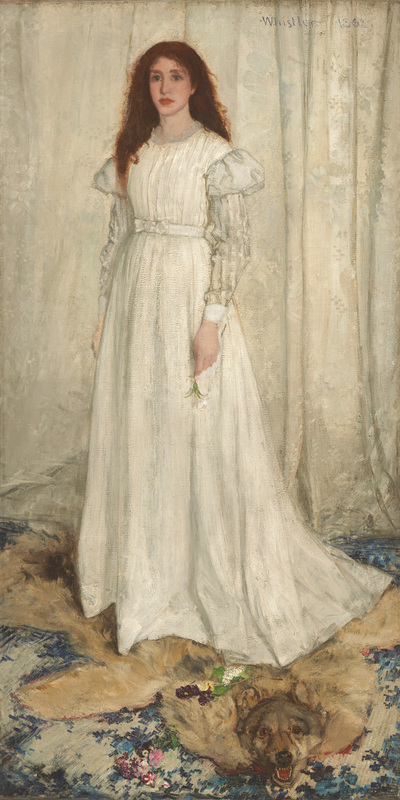 Symphony in White, Whistler By Sarah Bahl
Written by and acted in by Nia Vardolos, the 2002 film begins with a 5am overview of a blackened skyline, highlighted by blue city highrise lights while cheerful string Greek music plays. Rain, sleet and snow pour down as a sleepy brunette woman, who wears glasses and red ear muffs as she sits in a 80's sized car with her father who is driving. While at a stop light he looks at her in frustration and near disgust to say, "You'd better get married soon. You're starting to look...old." A voice-over of Toula defending herself begins; "My Dad's been saying that to me since I was 15. Because nice Greek girls are supposed to do three things in life: marry Greek boys, make Greek babies and feed everyone until the day we die." They are driving to the family restaurant, Dancing Zorbas, where Toula works as she is a nice Greek girl who has never married. And at 30 she is "way past" her expiration date. Toula laments that she has never quite fit in as a popular girl, even in grade-school because she was swarthy when all the cool girls were blond and delicate. Though the latter features are the minority in real life, the main difference lies in that Toula and her family do not fit a stereotypical mould of a midwestern middle class household. Her family is loud and social in everything they do and she has 27 first cousins alone. A quiet and thoughtful woman, she butters garlic bread everyday and wonders when her life will begin. But her future begins to slowly unfold to a new beginning after she meets a fellow, Ian, who is a teacher from a quiet, well to do family whose male line mainly consists of lawyers. Though, opposition comes from Toula's father who is very upset as in his opinion, his daughter is leaving him for God knows who from outside their own community. But life goes on and Toula finds a happy one.  By Sarah Bahl
The novel by Stacy Schiff, does not start out as seeming to be all that well written. It’s filled with overly general clichéd statements about power, territory and legend. “At the height of her power she controlled virtually the entire Eastern Mediterranean coast, the last great Kingdom of any Egyptian ruler. For a fleeting moment, she held the fate of the Western world in her hands. She had a child with a married man. Three more with another. She died at thirty-nine, a generation before the birth of Christ. Catastrophe reliably cements a reputation, and Cleopatra’s end was sudden and sensational.” According to the cover, the author apparently won the Pulitzer Prize at some point. The start to this novel is odd as it is a lot of very broad information that is not well connected, it only happens to be about the same person. It’s not totally disjointed either, but it’s not what one would expect from such a hyped novel. The first paragraph is only missing three or four exclamation points in a row. It’s also very condescending to the protagonist, whom has not been properly introduced to any given audience. There’s a difference between knowing vague generalities about a person and actually being introduced to a character whether biographical or not. “Cleopatra descended from a long line of murderers and faithfully upheld the family tradition but was, for her time and place, remarkably well behaved. She nonetheless survives as a wanton temptress.” For the majority she is perhaps best known as the lover of Mark Antony and a ruler of Egypt. It’s like the author is really saying Cleopatra is a whore no matter what she really did with her life. It was written in 2010. I’ve read novels from the 18th century that are more advanced, in the sense they are about the complexities of circumstance as tried upon human nature and the inevitable outcomes to it all, rather than any one female protagonist being a good or bad girl. Such writing does make one wonder if the future of novels is going backward or forward. For instead of an educated ruler with a control over vast domain, for her short life, one instead gets the picture of a Pretty Woman prostitute who was a good girl all the same and remembered to use dental floss: the well behaved wanton temptress. It seems Cleopatra is made into a modern American fantasy prototype than anything having to do with ancient Egyptian and Roman Empires. It’s not expected that everyone who writes a biography should be Antonia Fraser nor that every writer should introduce character with the alacrity of Collins or Dickens, but still, the writing has too many ideas that very broadly connect even in the body of the novel. Though, the body of the work is more specific than the introduction, it seems more of a judgment of a historical apparition than a biography at all. In Schiff’s view; poor, defenseless Caesar was forced by circumstance and Cleopatra’s wiles to do her bidding and get her pregnant. Somehow, one doubts this was really the case. “Cleopatra – or Egypt – tended to have this effect on poor, vulnerable Romans. Her country itself was a tease and a temptation…She roundly confirmed the myth of the propagative powers of her magnificent country.” It might be said Schaff could incorporate more emotive sophistication. There does seem to be research done for it, that would be difficult to undertake given the time lapse, but it might arguably not be a biography as it lacks professional objectivity. By Sarah Bahl 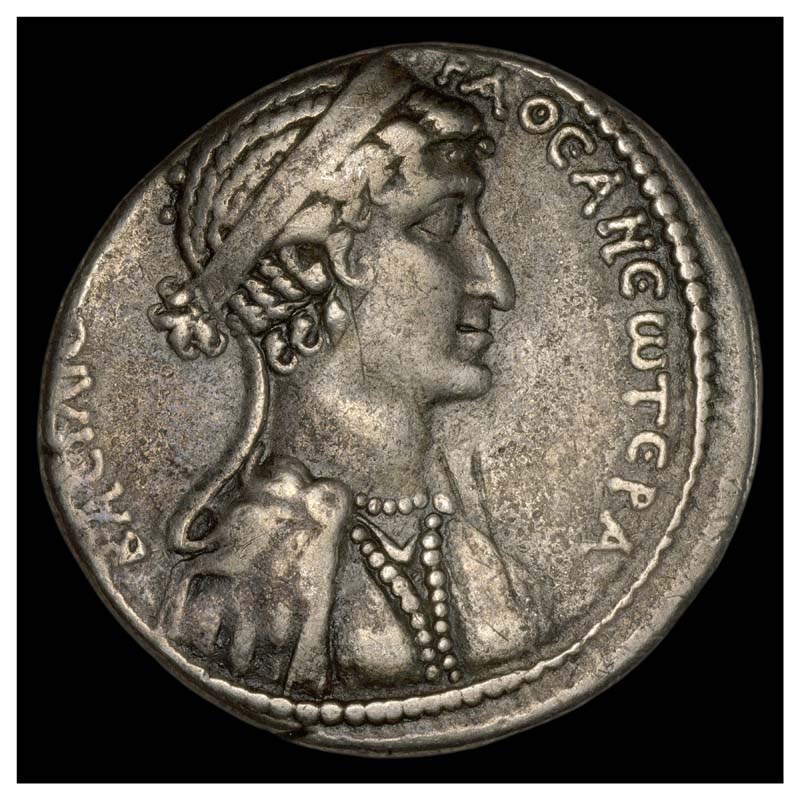 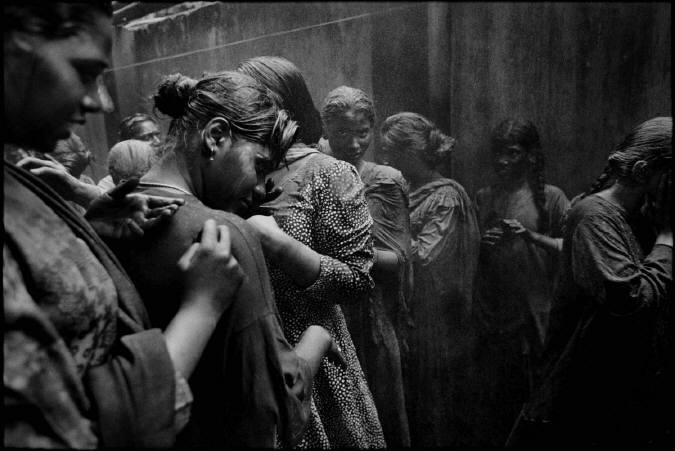 Born into Brothels (2004) begins with a fitting image of moths fluttering around a single bulb, that hangs next to a grimy wall. It is a close up that gives the viewer a strong sense of what lies in the background: heat, dirt and hopelessness. This is Kolkata (Calcutta), India. A little girl's large brown eyes are faded into an overhead scene of the red light district. Men with hard and bitter eyes walk by hopeful looking women. A little girl's voice says, "The men who enter our building are not so good. They are drunk. They come inside and shout and swear. The women ask me, 'When are you going to join the line?' " The girl looks to be no more than 10. "They say it won't be long," she says. Black, white and gray images are shown of women hiding their faces. Huddled together, as if lost sheep who know they've been sold for market. Even from the images one can tell that none of them seem like they ever wanted it this way, but so it has become. "The brothels are filled with children, they are everywhere," says Zana Briski, one of the film's producers, who lived in the brothels to more effectively photograph their inhabitants. And the kids took to Zana. They loved playing with her camera and taking pictures of her. They loved learning with images. There are several children that Briski focuses on for her work: Kochi, Shanti, Avijit, Suchitra, Manik, Gour and Puja. Kochi squats and cleans a pot with some sort of slime green colored soapy substance. Her job is to clean for a little money. She mops twice a day and runs errands for the prostitutes up to about 11 at night. If they want curry or rice, she must give it to them. She wonders what she could become if she got an education. Some of the prostitutes are married. But it does not seem that their husbands pool in any sustainable income, and drug and alcohol addictions are fairly prevalent. Sex is the reason any one of them eats. Prostitutes shout at each other as to who is the bigger whore while the children are given baths. The bitterness and shame is constant, and when the youths who are all fairly good looking, straight postured kids, enter the streets to take pictures, they are not spoken to as children. They are spoken to as the offspring of prostitutes. Grown adults will bully them about where they supposedly really got their cameras from. When the women are so overwhelmed by social pressures and by the sadness of their own lives, it might be hard for them to be adults for their own children and protect them as they should, as they are so often fending for themselves. Briski with her camera, is a huge relief to the community's kids. She works hard to get them into boarding schools. The paperwork to do so seems a never-ending ordeal that never really makes sense but somehow gets done. In the end and in real life, some of the children make it out of the world of prostitution. Some do not. By Sarah Bahl |
Archives
June 2017
Categories
All
|
 RSS Feed