By Xin Wen

 In the Mood for Love is a film made by a Hong Kong director Kar Wai Wong. This director was famous for not having a script. When shooting In the Mood for Love it is said that the crew moved from Beijing to Macau because the authorities asked Kar Wai Wong to show them the full script, but he did not have one. Though the shooting did not follow an actual script, the atmosphere in the film was beyond compare: romantic, elegant, oppressive, and passionate. People who were familiar with Kar Wai Wong knew that the storyline was never his focus—in this case, it was pretty simple too: a man (Tony Leung) and a woman (Maggie Cheung) were neighbors, and they both discovered that their spouses were having affairs. They were friends at first, but as time went by they became close and did not know exactly what their relationship was…


The dresses by William Chang

Apart from the original sound track of this film, which by the way is fantastic, the Chinese dresses wore by Maggie Cheung were the most eye-catching scenery. To reconstruct the exact kind of Cheongsam from 1950s, the art director William Chang and the director Kar Wai Wong extracted over 300 old film clips within which the actresses were wearing Cheongsam. William Chang even took some premium cloths out of his personal collection and contributed them to the costumes of the film. Together with a few experienced retired tailors from Shanghai, William Chang made 46 pieces of fine Cheongsams for Maggie Cheung. Though some of them did not survive to the final cut, we can see the beauty of them from a few snapshots here.


The history of Cheongsam

You must have noticed that the Cheongsams Maggie Cheung wore were extremely tight, but actually Cheongsam as a general kind of clothing worn by the noble class of Qing Dynasty, was baggy and loose. The reason led to this is that Qing Dynasty was built by a minority group; Qi people—whom used to live in the north-east part of China and usually rode horses to fight or to travel. For the convenience of riding horses gradually their clothes adopted a loose-fitting one-piece dress style. After Qi people dominated the country, they popularized their Cheongsam to ordinary Chinese people in other regions of the country.

The appearances of Cheongsam for women did not change much during nearly 300 years of Qing Dynasty. It was until Xinhai Revolution that it changed its style—the sleeves were shortened and the overall piece was fitting. In Shanghai, during the 1920s, the modern style of Cheongsam emerged and became the favorite of upper-class Chinese women. As the rise of womens’ position in the society increased, women were allowed to wear clothes that revealed their body curves. Of course today Chinese women can wear whatever they want, but the freedom to choose was not always there.

References:
http://www.imdb.com/name/nm0151858/bio

http://en.wikipedia.org/wiki/Cheongsam

http://www.imdb.com/title/tt0118694/

Pictures came from www.douban.com


by XIN WEN

Have you started wondering what to wear this Halloween? For me last Halloween is still vivid--I saw several guys dressed like ‘The Joker’ from Batman: the Dark Knight. Surely movies are always our resources of inspiration; we are more heavily influenced by movies than we thought perhaps. Christopher Breward in Fashion said: “As many commentators have noted, cinema, especially the Hollywood version of the idiom, has featured as an important adjunct to advertising in promoting a simple and reassuring consumerist version of life.”

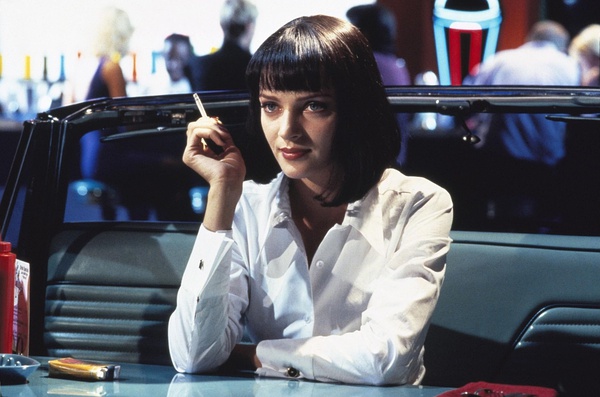
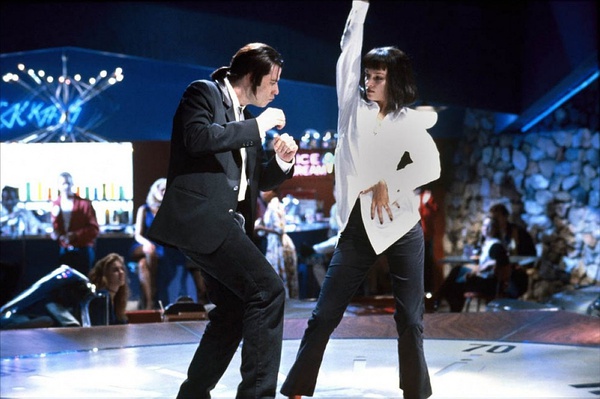
For this Halloween I recommend 90s style from Quentin Tarantino’s movies. For girls, I think Uma Thurman’s outfit in Pulp Fiction, 1994 is a simple, but wonderful choice. All you need is a crisp white shirt, a pair of black pants, rouge noir nail polish, and a black wig. In the film, Uma played an unsuccessful actress who did a pilot show and ended as a wife of a gang leader. The character made her debut with her extremely sexy red lips and her cool voice. She ordered a five-dollar milk shake and danced shimmy with her husband’s minion Vincent (John Travolta). Just when the audiences presaged and actually expected that she and Vincent would have a romantic night, she overdosed. Her white shirt was stained with her own slobber, and the simple, sexy style went to neverland.


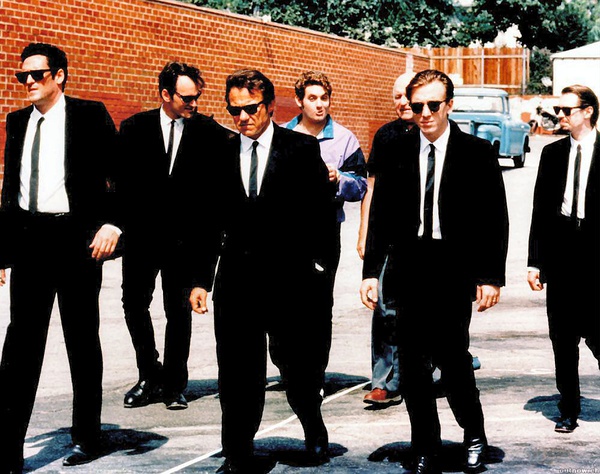
For guys I highly recommend the classical appearance of Mr. Colors from Reservoir Dogs, 1992. Again, it is super simple: all you need is a black suit, a white shirt, a skinny black tie, and a pair of ray ban sun glasses. Sure you’ll be in need of more guys to help you achieve the stylish spectacle, since in Reservoir Dogs there are six of them.


Quentin himself admitted that he borrowed this gangster style from a look created by French director Jean Pierre Melville. This director inspired a few New Wave directors and was famous for his minimalist film noir crime dramas. However, the “borrowing” nature did not harm the charm of Mr. Colors. Quentin is a remix genius. (here is a video about his remix ability, <start from 7:20>) He combined songs, looks, styles, shots from so many movies and created his own legend. For example: though all the people recognize Bruce Lee from his yellow tight gym suit, if a woman wears it with a long knife in her hand, people would say that’s Uma Thurman from Kill Bill. This remix gift gave popular culture vitality; this remix gift made him a director who will never be neglected.

References:

http://entertainment.msn.com/beacon/editorial1.aspx?ptid=2038c9a7-3e3d-49fd-a6f4-78cfc10eeeb4

http://i-am-db-cooper.hubpages.com/hub/How-to-dress-like-the-guys-in-Reservoir-Dogs

pictures come from www.douban.com