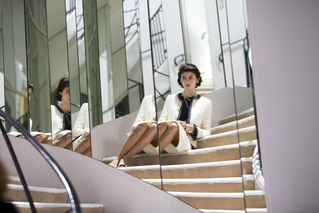
 Coco Before Chanel, is a film about the rise of a woman, born into poverty and determined not be another drudge in the system. (Our lead character is a born snob.) The film begins with two girls being driven in a simple peasant cart. It is 1893. They are taken to a nunnery, where the nuns wear incredibly starched wide sweeping black and white head covers, that are essentially enormous fabric triangles on their heads. Even for the nuns, 1893 was not an era of practicality when it came to fashion.
Gabrielle Chanel and her sister Julie, are the two young girls in the cart. They are wordlessly and unceremoniously dropped off by their father for care within the abbey, that served as an orphanage for poor undesired girls and as a boarding house for wealthy young girls. Chanel waited for her father to come back every week while at the abbey. He never did. Chanel and her sister both become pretty women, working as seamstresses during the day and in a pub as singers in the evening. Their dresses are very simple. There is a huge difference in the style and the fabric of how the wealthy women dressed versus the working class women. For example, today, there is not a huge difference in the style, cut, color and detail of a suit Hillary Clinton would wear to work, versus, a secretary working as an administrator in any given office. In the early 1900s, differences in terms of style of clothing when it came to class were of incredible variance. Wealthy women had a marked amount of detail in their fabric, how their hair was done, and the jewels they wore. So much adornment. The working class women wore very simple, clothes of plain coloring, that differed greatly from the garb of the wealthy. At the pub, Chanel meets her lover and protector Étienne Balsan, who she insists on staying with, as she sees him as pivotal to her gateway toward a better life. It is Balsan, who christens Chanel with the name Coco, after a song she sings. The name does seem to suit her tomboyish nature and simple features. Coco, charms Balsan with her quaint mannerisms, her love for clothes, horses, and need to be something different. She is known to dress as a boy, most of the time. To forego the use of a corset and practice other such anomalies for the day. Coco, consistently wants to have more and be more. She realizes she will never have a stage career but the hats she makes are well liked and in demand. She has a knack for sewing. She leaves Balsan, who remains a supportive father figure throughout her life, for Arthur, “Boy” Capel, a friend of Balsan’s. Boy asks Balsan to have Coco for the weekend, which is how their love affair began. It might seem terrible today for two men to share a woman without complaint, but during the early 1900s in Europe it, was considered unseemly for men to rival each other for a woman. And if one man wanted to sleep with another man’s lover or even a wife, the husband in question should consider the offer a compliment, that another man would want his wife/lover. It was the culture at the time. Coco leaves Balsan, because he wants her to be his alone, and to have no other features. He wants her to become his wife and she says no. She wants a different future for herself. Boy is the man who supports her career ambitions. He lends her money to start her own business. With the money to launch her own creations on a consistent basis Coco Chanel leads the world of fashion in two manners. First, she lessens the differences in clothing when it comes to class. Her outfits are simple and chic. Second, she lessens the difference in clothing when it comes to gender. Her boyish, elegant simplicity is trademark of all her fashions. Her ideals matched wide sweeping sentiments toward womens' rights at the time. Chanel lead the world of fashion into incredible changes, that are very visible today. By Sarah Bahl 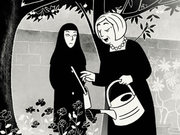 For anyone who loves their grandma as I do, Persepolis, (2007 Animation) is a truly amazing film. Based on the autobiographical book, of the same name, by Marjane Satrapi, the movie tells the story of a young Iranian girl, Marjane, as she grows from a child into an adult, during the 1970s and 80s fall of the Shah, and the bloodbath civil war that ensued, fueled by the West. 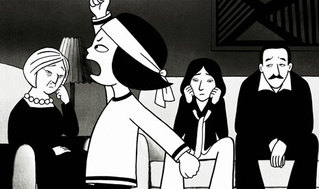 Marjane is a precocious child, and made well aware at a very young age of how politics and changes in the tide of human fortune can lead to life and death situations, even among those she loves. Marjane, has two supportive, educated, down to earth liberal parents, and her grandmother provides Marjane the sentimental inspiration that drives Marjane’s faith. The scenes begin with Marjane at an airport in France, smoking, and looking back over her life so far. I won’t relay all the scenes, so as not to spoil the film, but will skip to where Marjane and her grandmother are at the movies together in Iran, watching a Japanese film where a monster is eating up a city. The grandmother shouts advice to the characters on screen, and covers Marjane’s eyes for the graphic parts, much to the young teenage Marjane’s mortification. It is snowing as Marjane and her grandmother exit the film. They talk of an uncle who needs a heart transplant, but cannot receive it because he cannot get a passport due to the extreme religious take over of the ruling government body. The aunt who speaks to the hospital’s director to beg for her husband’s life, realizes the hospital director, is her old window washer, and he now has the position he does because of his religious zeal to the Ayatollah. The hospital director/window washer tells Marjane’s aunt, that everything is meant to happen as God wills. And nothing more is done to help the aunt’s husband who needs heart surgery abroad in order to live. Marjane mentions the uncle smoking as a trigger of his health issues and the grandmother rebuffs her, saying it is that he lost his children (sent abroad) due to a ridiculous war, that caused the uncle’s heart to fail. Marjane and her grandmother discuss her uncle’s health, while they order a warm snack from a food vendor; alone with his cart in an empty, snow filled threshold. Touched by their conversations, the vendor states, “May God eradicate these barbarians.” The grandmother replies, “May God hear you.” Marjane and her grandmother continue home and the scene broadens to reveal this man, the warm food vendor, calmly and patiently hovered over his cart for heat in a desolate snow filled square. Persepolis, reveals that people, including families, do not only live with each other, but for each other. The memories of Marjane’s grandmother, how she smelled of jasmine, is shown as a tribute to the woman who taught Marjane to value herself as an individual, to rise above human folly, even horror, so as to have integrity.  By Sarah Bahl
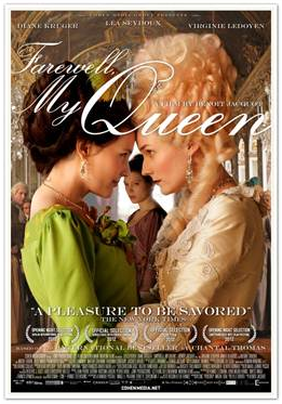 Farewell, My Queen (Les adieux a la reine) directed by Benoît Jacquot; provides a uniquely intimate portrait regarding the ending climax of King Louis XVI's reign. The intimacy is due to the perceptions of the story being told from the perspective, not of the reigning nobility, but from that of a top end servant girl, who works and lives among the most powerful members of court-life at Versailles Palace (about 14 miles from Paris). The film begins with a very realistic opening scene of Sidonie Laborde, on July 14th 1789. Sidonie, is the servant who drowsily and slowly wakes within a sun filled simple room, wearing loose fitted white night clothes and scratching mosquito bites as flies buzz around her. It is easy to feel the heat of the day in the room and one wonders how the nobility manage wearing so many layers of clothes during the summer. I find Sidonie's daytime work outfit to be beautiful and intricate. Her hair is simply placed on top of her head uncovered and she wears no makeup. Despite Sidonie's natural beauty, I realize what she wears is nothing compared to the detail and marked sophistication of Queen Marie Antoinette's unusually stunning garb. The Queen's eyebrows are light and when at court she wears full make-up. Within her private chambers, she does not. There are details within the film, that reveal the lack of hygiene behind the daily lives of those in court, despite all the finery. For instance; Sidonie's arms are covered in welts from bites and she wears the same dress everyday, except for one. How much the smell could have matched with the look is of question.It appears Sidonie only has three outfits. One, her nightdress which might be the same as what she wears under her day dress. Then there is a formal dress of her own she wears toward the end of the film. Though, the hygiene efforts do speak of the general standards throughout Europe at the time, it still causes one to wonder: if this is the standard for the fairly well off Sidonie, how much are the multitude of persons within France suffering on a daily basis? The servants seem to have enough to eat but no table manners. Sidonie, despite her well read proficiency toward life, has no idea how to eat from a fork, nor what to do with her elbows. It is a reminder of how, despite her education and natural intelligence, she is a servant. Kept to a certain place. Sidonie is awoken by a chiming clock, a rare treat for a servant girl to have in her possession. Sidonie is given the task of reading to the Queen. The Queen's attentions flit from one task to another. From plays to fashion designs, to rosewater ointment for Sidonie's welts. The Queen is married to the King, but they are never seen directly together until the King leaves Versailles. Why he is separated from his wife and children during such dangerous times for the family is not explained. It is not made known the Queen has children until toward the end of the film. It is a film very much about adult needs, desires, and games. The Queen makes her appetites readily known and she is familiar with both genders on the subject. Her true love appears to be for a high ranking noble woman and this love is known both to the King and the whole court. Marie Antoinette and the King see each other for one very dry, awkward parting farewell kiss with the children present. Sidonie holds true love for the Queen in her heart, until she realizes, she is just a pawn, in a brutal game of survival among falling powers. The Queen gets what she wants for the most part, and she plays very aptly with Sidonie's lonely emotions, in order to cull her into submission. Sidonie is also outnumbered both by individual powers and circumstance. There is really no outlet for an independent voice of her own within the confines of court life on the eve of the French Revolution. The most human factor in the film, is another one of the Queen's personal attendants, who implores Sidonie not to do what the Queen is about to ask her. 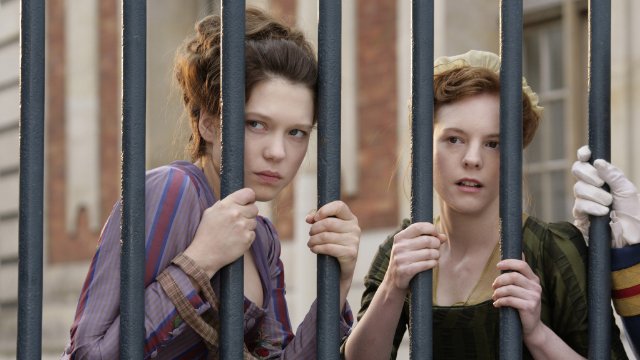 By Sarah Bahl
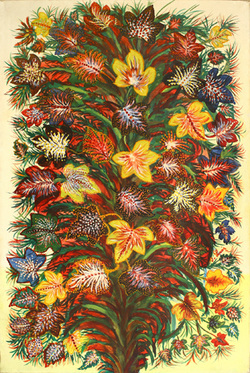 Seraphine, Feuilles D'automne 1928-30 Seraphine, Feuilles D'automne 1928-30 Séraphine (directed by Martin Provost), recently screened at the French Embassy is a movie about the triumph of human character over circumstance. The story begins with a woman hunched over, collecting mud and water from a pond. She wears a blue shawl. Her body is dowdy, and her dress shapeless. She hums to herself and looks about her with adorable, inquisitive blue-grey eyes. She likes to sit in a tree and smell the air with the breeze blowing her forever unkept hair about.
This is Séraphine, a servant for patrons in a fairly small town at the dawn of World War I in France. She manages, despite the plethora of errands she runs during the day, to paint. And paint she does. By creating mixtures out of nature and some bought supplies. Some stolen, as well. However she needs to paint, she does. She sings to herself as she paints, much to the non-entertainment of the dwellers one floor below her. She is lovable, weird, as awkward as she is natural, and very, very much herself. One of the tenants, Wilhelm Uhde, is renting a flat from Séraphine’s mistress. Uhde is a frontrunner in the art world and a well noted critic. He takes a liking to Séraphine and she to him. She lets him know she paints and the word of Séraphine’s exploits travels to her mistress; who of course, demands to see Séraphine’s work, only so she can mock it and tell Séraphine to give up. The mistress’s son, stands up for Séraphine’s work, and keeps his mother from throwing it away altogether. The piece is laying to the side on the wall in the dining room, when it is noticed by Uhde during a dinner. He demands to know who the painter is and the mistress reluctantly has to admit that it is Séraphine. Uhde becomes Séraphine’s patron and protector. He has to encourage her to sell her work and she seems reluctant because she is afraid of losing her place. Of breaking with the traditions within her own life of servitude. But Uhde convinces her and she agrees to exhibit and sell her work. It is a “pure” relationship as Uhde informs Séraphine that he will never marry a woman in his life. Uhde has to leave France as the War progresses but comes across her work at a local show many years after the War has ended. The two strike up a relationship once more and Séraphine’s art sells as part of what is known as the naïve genre. She continues to paint, but her relationship with Uhde is strained due to her spending habits. She spends more than is coming in and on the oddest things. Such as a wedding dress, when there is no actual wedding. Séraphine’s eccentricities descend into a sad outright madness. She dons her wedding dress and by herself in bare feet, walks through the town knocking on doors and leaving empty silvered candleholders on the doorsteps. At the top of the town stairs are local authorities, waiting to take Séraphine away, in a van. She seems to know why they are there and submits without any confrontation. She just gets into the van, barefoot and in her beautiful dress. The cinematography throughout the film is breathtakingly clear, as if to reflect the purity of Séraphine’s soul and intentions. Uhde attempts to visit Séraphine, but she is too far gone. He makes her more comfortable, by buying her a place in a home where she can be alone. And the final scene is of Séraphine, sitting down on a chair in the middle of a field by herself under a large, comforting tree. Séraphine had the courage to tell a story of a world that begins and ends within herself. She became known as Séraphine of Senlis. It is still not known exactly how her paintings were made. They are of fruits and trees, as if in a child’s dream. By Sarah Bahl The image is from madamepickwickartblog.com By Xin Wen In the Mood for Love is a film made by a Hong Kong director Kar Wai Wong. This director was famous for not having a script. When shooting In the Mood for Love it is said that the crew moved from Beijing to Macau because the authorities asked Kar Wai Wong to show them the full script, but he did not have one. Though the shooting did not follow an actual script, the atmosphere in the film was beyond compare: romantic, elegant, oppressive, and passionate. People who were familiar with Kar Wai Wong knew that the storyline was never his focus—in this case, it was pretty simple too: a man (Tony Leung) and a woman (Maggie Cheung) were neighbors, and they both discovered that their spouses were having affairs. They were friends at first, but as time went by they became close and did not know exactly what their relationship was… 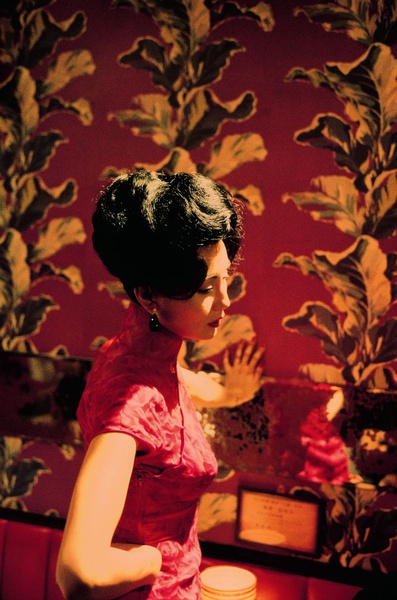 The dresses by William Chang Apart from the original sound track of this film, which by the way is fantastic, the Chinese dresses wore by Maggie Cheung were the most eye-catching scenery. To reconstruct the exact kind of Cheongsam from 1950s, the art director William Chang and the director Kar Wai Wong extracted over 300 old film clips within which the actresses were wearing Cheongsam. William Chang even took some premium cloths out of his personal collection and contributed them to the costumes of the film. Together with a few experienced retired tailors from Shanghai, William Chang made 46 pieces of fine Cheongsams for Maggie Cheung. Though some of them did not survive to the final cut, we can see the beauty of them from a few snapshots here. 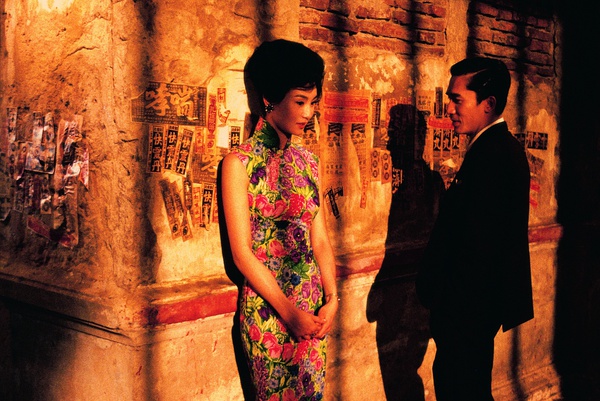 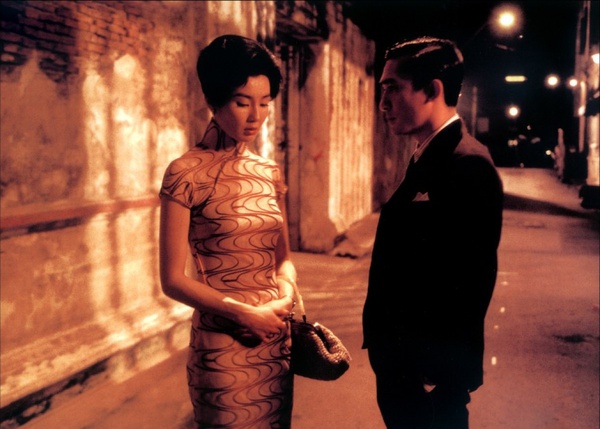 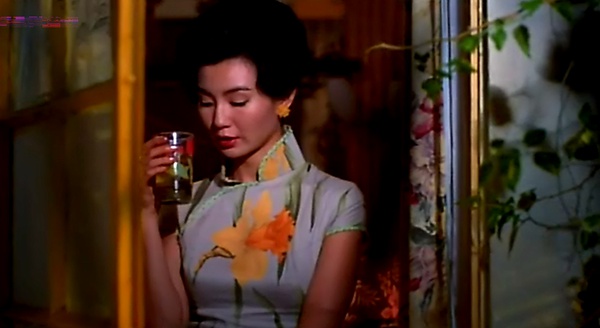 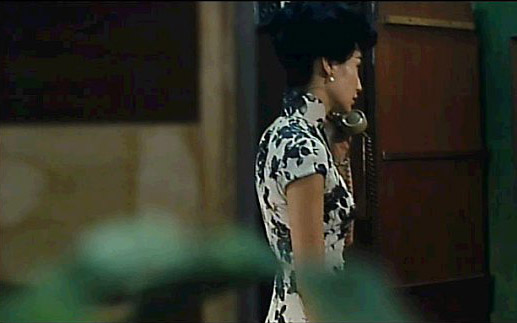 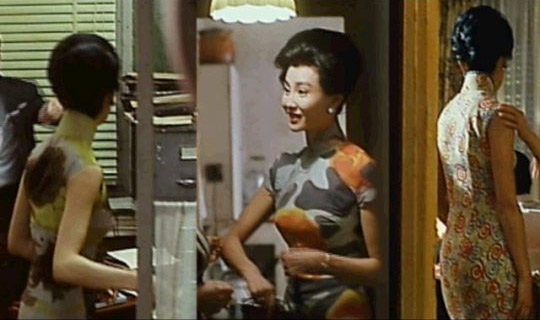 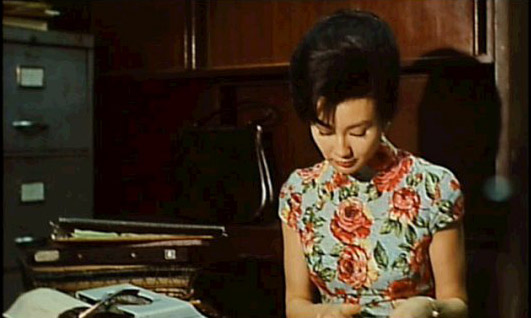 The history of Cheongsam You must have noticed that the Cheongsams Maggie Cheung wore were extremely tight, but actually Cheongsam as a general kind of clothing worn by the noble class of Qing Dynasty, was baggy and loose. The reason led to this is that Qing Dynasty was built by a minority group; Qi people—whom used to live in the north-east part of China and usually rode horses to fight or to travel. For the convenience of riding horses gradually their clothes adopted a loose-fitting one-piece dress style. After Qi people dominated the country, they popularized their Cheongsam to ordinary Chinese people in other regions of the country. The appearances of Cheongsam for women did not change much during nearly 300 years of Qing Dynasty. It was until Xinhai Revolution that it changed its style—the sleeves were shortened and the overall piece was fitting. In Shanghai, during the 1920s, the modern style of Cheongsam emerged and became the favorite of upper-class Chinese women. As the rise of womens’ position in the society increased, women were allowed to wear clothes that revealed their body curves. Of course today Chinese women can wear whatever they want, but the freedom to choose was not always there. References: http://www.imdb.com/name/nm0151858/bio http://en.wikipedia.org/wiki/Cheongsam http://www.imdb.com/title/tt0118694/ Pictures came from www.douban.com |
Archives
June 2017
Categories
All
|
 RSS Feed