 by Yoonjoung Lee
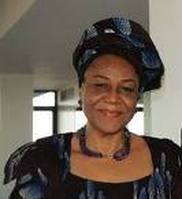
A former Foreign Minister of Nigeria and a director-general of the Nigerian Institute of International Affiars (NIIA), Joy Uche Angela Ogwu, was born in Dalas State in 1946. She obtained her academic training in leading institutions both in Nigeria and the United States. She finished her BA and MA in Political Science at Rutgers University and later received her Ph.D at the University of Lagos in Nigeria in 1977. In her specialization in International Relations, she earned major academic awards and distinctions. Her career started at the Nigerian National War College and the Nigerian Institute for Policy and Strategic Studies (NIPSS) as an assistant lecturer. At NIPSS, she worked as a research fellow while she published her first book, Nigerian Foreign Policy: Alternative Futures (Macmillan, 1986). This work promotes more African ties to Latin America and became a classic text for the study in Nigeria's Foreign Policy. She worked for International Politics’ research department as the first female Director General, and she later started to focus her study on developing countries of Latin America and their relationships with Sub-Saharan Africa, while she was a visiting fellow at the University of London’s Institute of Latin American Studies. She has worked as Presidential Delegate and Special advisor on various Nigerian delegations to the United Nations General Assembly since 1988. In 1994, she served the Multinational United Nations Observer Mission in South Africa (UNOMSA) that oversees the country’s transition to majority rule. In 2002, as an expert on security issues, she was appointed as a member of United Nations Advisory Board on Disarmament Matters by the Secretary-General of the United Nations, Kofi Annan. Four years later in 2006, she became Chairman of the Advisory Board as the first African female to serve the annals of the United States. From 2000 to 2006, she greatly contributed to the development of foreign policy in Nigeria as she served as a member of the Presidential Advisory Council on International relations. She was also working as a professor of Political Science and International Relations at the Command and Staff College in Jaji, National War College in Abuja, and the Institute for Policy and Strategic Study (NIPPS). Her specialization there was the relationship between African and Latin American including an intensified South-South relationship. Her numerous works include Nigeria’s International Economic Relations: Dimensions of Dependence and Change; the Nigerian Navy and the South Atlantic; the Economic Diplomacy of the Nigerian State; and New Horizons for Nigeria in World Affairs. Many of her lectures she gave over the world focused on South-South relations. Her presence in the auspices of NIIA and the Presidential Advisory Council on International Relations contributed to lead not only the Nigeria-South America relationship to the next level but also furthered the funding program from the United Nations Education Social and Cultural Organisation (UNESCO) to Nigerian Schools. Joy Ogwu is one of the most prominent figures in the formation of Nigeria’s relationship with the rest of the world as well as women’s development and human rights. 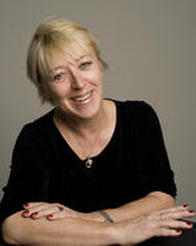 by Yoon Joung Lee Jody Williams, the founding coordinator of the International Campaign to Ban Landmines (ICBL) was born in 1950 in Vermont. During her childhood, she was able to learn to hate injustice through her brother. Her brother was deaf and suffered from schizophrenia. At an early age, she witnessed that her fellow children harshly picked on her brother. Throughout this experience, she became dedicated to the cause of peace. She showed her passion while protesting the war being waged in Vietnam. She received a BA from the University of Vermont. She also got her Master’s degree in teaching Spanish and English as a Second Language from the School for International Training in 1974. After completing her MA degree, she went to Mexico for two years to teach English. In Mexico, she, for the first time, saw extreme poverty. When she came back to the States from Mexico, she also taught English while she attended Johns Hopkins University and received her second master’s degree in International Relations in 1984. However, the turning point when she passionately began to become involved in anti-war activities was when she received a leaflet on the street. The leaflet was about U.S. involvement in a civil war in El Salvador. Two years later, she became a Central America’s coordinator for the Nicaragua-Honduras Education Project and then became deputy director at Medical Aid for El Salvador. In 1991, Williams was phoned by the president of Vietnam Veterans of America Foundation, Bobby Muller. He suggested for her to coordinate a new effort to ban landmines over the world. She became the founding coordinator of the International Campaign to Ban Landmines (ICBL), formally launched by six nongovernmental organizations (NGOs) in 1992. Williams has overseen more than sixty countries with more than 1000 NGOs who work for an end to the use, production, trade, and stockpiling of mines. Williams continues to serve the ICBL as a campaign ambassador and editor of the organisation's landmine reports while she works as a distinguished professor of social work and global justice at the University of Houston Graduate College of Social Work. In 1997, the Norwegian Nobel committee named Williams and the ICBL as the recipients of the 1997 Nobel Peace Prize. Her dedication and effort for peace did not stop with the Nobel Prize Award. In 2006, she co-founded The Nobel Women’s Initiative along with its sister organization Nobel Peace Laureates. These size women including Jody Williams, Shirin Ebadi, Wangari Maathai, Rigobetra Menchu Tum, Betty Williams, and Mairead Corrigan Maguire represent their extraordinary experiences in a united effort for peace with justice and equality in North and South America, Europe, the Middle East, and Africa. |
Archives
July 2017
Categories
All
|
 RSS Feed