 Mary Mahoney (Public Doman Photo) Mary Mahoney (Public Doman Photo) Mary Mahoney became the first African American woman to complete nursing school in the United States. She not only dedicated her career toward helping others in a medical sense, but used her civility, expertise and empathy to raise workplace standards for minorities, dissolve discrimination and encourage an atmosphere of equality.
Early Years Born in 1845 in Dorchester, Massachusetts, a suburb of Boston, Mary was the oldest of three children. Her parents were freed slaves who moved north from North Carolina before the Civil War to escape discrimination, which is something Mary would continue to fight against throughout her life. Even in her adolescence, Mary knew she wanted to become a nurse. She spent 15 years working on New England Hospital for Women and Children until she was finally accepted into the hospital’s nursing school in 1878. After the rigid 16-month training curriculum, Mary graduated and became the first black woman to complete such a program in the U.S. Working as a private care nurse among predominantly wealthy, white families, Mary’s professionalism and skill helped raise the status of minority nurses. Through preparedness, competence and know-how, Mary was able to distinguish herself, break down bridges and build relationships in the communities in which she served. A Career and Life Full of Fighting for Right Throughout her career, Mary made strides for women and minorities. She was inducted as one of the first African American members to the Nurses Associated Alumnae of the United States and Canada, which is now known as the American Nurses Association. Additionally, Mary founded the National Association of Colored Graduate Nurses (NACGN) in 1908. As the NACGN’s first annual convention, Mary spoke about the goals of the group, which included eliminating prejudice and applauding outstanding minority nurses and their contributions to the field. And, it wasn’t just in medicine that Mary made her presence known. In 1920, following the ratification of the 19th amendment for women’s suffrage, Mary was the first woman in Boston to register to vote. Later Life and Lasting Contributions Mary finished her nursing career on Long Island, New York, working as the director of the Howard Orphan Asylum, which offered a home to African American children and elderly. In 1926, at the age of 80, Mary passed away, but even many years after her death, Mary’s contributions still carry weight today. In 1936, the NACGN named an award after Mary, and in 1951, the NACGN merged with the American Nurses Association - eliminating a division in races that Mary spent much of her life fighting for. In honor of her lasting contributions, the award continues to be given out to nurses for their work in advancing equality in the field. Mary’s true professionalism, compassion and relentless strive for equality throughout her life earned her a well deserved spot in the National Women’s Hall of Fame in 1993.
0 Comments
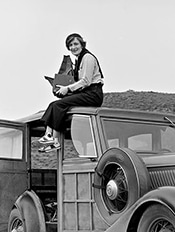 Dorothea Lange. Photo source: Rondal Partridge Farm Security Administration / Office of War Information / Office of Emergency Management / Resettlement Dorothea Lange. Photo source: Rondal Partridge Farm Security Administration / Office of War Information / Office of Emergency Management / Resettlement Dorothea Lange’s ability to capture, and humanize, the hardship and struggles during the American Great Depression, made a lasting impact in the field of photojournalism and documentary photography. Furthermore, by capturing what she saw, and sharing it, others were able to not only see, but empathize with trials of the time.
Early Years Born in 1895 as Dorothea Margaretta Nutzhorn in Hoboken New Jersey, Dorothea was raised by parents who placed value on education and creativity. Her father was a lawyer and her mother stayed at home to raise Dorothea and her brother, Martin. At the age of seven, Dorothea contracted Polio, which left her right side weakened for life. Though traumatic, Dorothea said the illness made a lasting impact on who she became as a woman. “It formed me, guided me, instructed me, helped me and humiliated me,” Lange once said. The experience and its lasting impacts helped Lange empathize with those she photographed later in her live. In her early teens, Dorothea’s parents divorced and resulted in a falling out that led Dorothea to drop her father’s last name and assume “Lange,” her mother’s maiden name. Lange graduated from a high school for girls and wen on to study photography at Columbia University. During this time, Dorothea took on apprenticeships with influential photographers, such as the esteemed Arnold Genthe, a portrait photographer, and took classes taught by Clarence Hudson White. Making Career Strides In 1918, Dorothea left New York for San Francisco where she opened up her own portrait studio. In 1920, she married painter Maynard Dixon, and the couple went on to have two sons, Daniel and John. With a tumultuous political economic climate, Dorothea stepped from inside her studio and took her camera outside. She began by photographing events occurring on the streets around her - from strikes to breadlines. In fact, in 1933, her studies of the times led to White Angel Breadline, which showed a man turned away from a soup kitchen. Her photograph not only caught the attention of other photojournalists, but led to the beginning of Dorothea’s career with what eventually became the Federal Security Administration. In 1935, Dorothea divorced Dixon and married Paul Taylor, a University of California at Berkeley professor of economics. Over the next half decade, the two traveled and documented poverty and hardship with Paul writing reports and Dorothea taking photos. During this time, Dorothea captured Migrant Mother, one of her most known works, which showcases the suffering and despair of a mother -- a feeling experienced by many Americans during the time. Following her work’s truth and success, Dorothea Lange became the first to be awarded the Guggenheim fellowship in 1940. Wartime and Later Years The Office of War Information hired Dorothea to document the internment of Japanese Americans during World War II. After the war, she co-founded Aperture, a photography magazine as well as shot photos for other while known publications such as Life magazine and traveled with her husband Paul to his work related assignments around the world. Though still very active, Dorothea’s health declined in the last two decades of her life, and in October 1985, she passed away of esophageal cancer. Yet, still today, she Dorothea Lange continues to inspire photographers. Dorothea’s images, the truth they showcased and her empathy behind the lens not only made a lasting impact in the field of photography, but her approach and mentality also continues to live on in 21st century documentary and photojournalists. 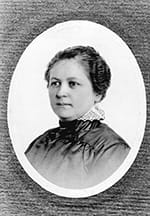 Coffee lovers can thank Melitta Bentz for her contribution into transforming the staple breakfast beverage from one that was bitter and full of grinds, to a grounds-free, aromatic hot drink. Bentz did this by creating what we now commonly refer to as the coffee filter and starting a business, which has operated for more than a century, to sell these and more.
Early Years Melitta was born on January 31, 1873 in Dresden, Germany as Amalie Auguste Melitta Liebscher. Raised by a family of entrepreneurs and businessmen, Bentz grew up in an enterprising environment. Her father was a publisher and book salesman and her grandparents owned a brewery. Melitta fell in love with and married Johannes Emil Hugo Bentz. The couple went on to have two sons, Willy and Horst, in 1899 and 1904, respectively, and one daughter, Herta in 1911. Innovating at Home In the early 1900s, coffee was a household staple. By pouring hot water over a cloth bag, or via an espresso-like machine, the popular breakfast drink was made. However, at the turn of the 20th century, both of these practices frequently left grounds of coffee in the drink. Despite metal filtering devices available at the time, Melitta still found her coffee full of grinds and bitter. Determined to have a cup of Joe without the grinds, Melitta began experimenting. She perforated a brass cup with nails and then used blotting paper from Willy’s school book to line the cup. The result? A simple fix to create less bitter, more fragrant coffee—grounds-free. Building a Business Melitta’s grounds-free coffee was well received by those she shared it with, which led her to set up her own company. On June 20, 1908, the Imperial Patent Office granted Melitta a patent for her filter. Later that year, in December, her company, M. Bentz, was entered into the commercial register and Melitta was officially in business. Melitta’s first employees were none other than her own husband and sons. In 1909, just a year after Melitta began her company, she sold 1,200 filters at the Leipzig Fair. The following year, in 1910, her business was awarded a gold medal at the International Health Exhibition. And, over the years, the awards kept on coming. Melitta’s company continued to grow and moved to several different locations in Dresden to accommodate for expansions. By 1929, she had produced 100,000 filters. In the same year, the company’s headquarters was moved to Minden in Westphalia. Melitta made sure her employees were always well cared for, and she even set Melitta Aid, a social fund for her workers. In 1930, Horst took over running the business, but Melitta continued to have a presence in the business. In 1932, the company is renamed Melitta-Werke AG. Later Years During World War II, the company was ordered to make goods for the war, but in 1948, the production of coffee filters began again. In 1950 at 77 years old, Melitta passed away, but her spirit of innovation and the brand she created lived on. During the year of her death, the company was worth 4.7 million Deutsche Marks. Today the Melitta Group KG has grown to include 50 companies, more than 3,000 employees and is still in the family, controlled by Melitta’s grandsons, Thomas and Stephen Bentz. 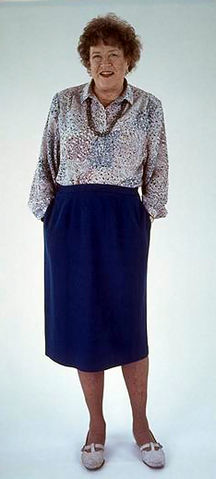 By Original is polaroid photo taken by Elsa Dorfman in 1988derivative work: ScewingJulia_child1.jpg: Elsa Dorfman - Julia_child1.jpg, CC BY 2.5, https://commons.wikimedia.org/w/index.php?curid=15692544 By Original is polaroid photo taken by Elsa Dorfman in 1988derivative work: ScewingJulia_child1.jpg: Elsa Dorfman - Julia_child1.jpg, CC BY 2.5, https://commons.wikimedia.org/w/index.php?curid=15692544 Julia Child became a recognizable household name for her contribution in bringing fine French cuisine into American homes. A chef, author and television host, even after her death, Child still makes an impact in many people’s kitchens daily.
The Beginning Born to the name Julia Carolyn McWilliams in 1912 in Pasadena California, the oldest of three children, Julia was grew up in a wealthy household. Her father, John McWilliams, invested early in California real estate and became an influential landowner, while her mother, Julia Weston, was an heiress to a paper company. Additionally, her grandfather, on her mother’s side was the lieutenant governor of Massachusetts. Educated at elite prep schools, Julia not only grew to be well educated, but also a prankster measuring at 6’2” tall -- taller than anyone in her class. Despite the master cook she would become, Julia didn’t spend much time in the kitchen during her childhood. In fact, in 1930, she enrolled in Smith College with aspirations to become a writer. While in college she played sports and attempted unsuccessfully to get her work published by the New Yorker. After graduation, Julia moved to New York to work as a copywriter at W&J Sloane, a home furnishing company. Service During War Like many, Julia joined the war effort. Too tall to enlist in the Women’s Army Corps, she took on a post by volunteering for the newly developed Office of Strategic Services as a typist. Due to her education, she quickly rose to a different post where she began working as a secret researcher. In this role, Julia traveled to a variety of posts in Washington, DC, China and Sri Lanka, where she became involved with one of her colleagues, Paul Child. While in Sri Lanka, Julia got her first experience in the cooking world, but not in the way one might think. She was tasked with finding a solution for how to stop sharks from setting off OSS explosive devices. Her solution? Experimentation with concocting shark repellent mixtures. Introduction to French Cuisine Paul and Julia returned to the U.S. after the war and were married in 1946. Though from New Jersey, Paul spent time living in Paris and introduced Julia to French cuisine, and, in 1948 when Paul was assigned as an exhibits officer for the US Information Agency in Paris, the couple moved to France. During this time, Julia attended the renowned Cordon Bleu cooking school. While at the Cordon Bleu, Julia joined Le Cercle des Gourmettes, an exclusive women’s cooking circle in Paris. In this group, Julia formed friendships with fellow Cordon Bleu students, Simone Beck and Louisette Bertholle. Beck and Bertholle were working on a French cookbook for Americans and brought Julia into their goal. For more than a decade, the three tested recipes and experimented with cuisine for consideration in the cookbook. The conclusion? A 734 page cook book weighing three pounds. Due to this extensive detail, the women’s original publisher denied the manuscript. However, in 1961, Alfred A. Knopf saw the value in bringing a cookbook of this sort to America and published the manuscript under the title, Mastering the Art of French Cooking. The book not only was pervasive in its details, but it also included illustrations -- all this contributing to the cookbook remaining a bestseller for half a decade. Still today, Mastering the Art of French Cooking is a staple in many American kitchens. From Publishing to Television Julia promoted Mastering the Art of French Cooking locally with television stations in Boston and Cambridge, Massachusetts, and due to the very high responses received, WGBH asked Julia to film her own series, “The French Chef.” The show, which premiered in 1962, helped change the way Americans related to food, cooking and cuisine. In her very first episode, Julia showed audiences how to cook an omelette. Due to the show’s immediate success, it was soon syndicated to 96 stations throughout the U.S., which prompted Julia into becoming a nationally recognized TV personality. The French Chef ran for a decade, winning numerous awards such as the prestigious Peabody. The show was so popular that it became the first to run captions for deaf audiences. Julia went on to be incredibly successful with multiple television shows such as Julia Child and Company, Julia Child and More Company and Dinner with Julia’s. She also founded the American Institute of Food & Wine in 1981. Not to mention the slew of cookbooks she went onto write, which included Julia's Kitchen with Master Chefs (1995), Baking with Julia (1996), Julia's Delicious Little Dinners (1998), and Julia's Casual Dinners (1999). Legacy Julia was the first woman to ever be inducted into the Culinary Institute Hall of Fame in 1993 and in 2000 she was named with one of France’s highest honors as the Legion d’Honneur. Her influences in American culinary culture that the Smithsonian National Museum of American History showcases Julia’s kitchen. In 2004, Julia died from kidney failure, but she is described to have vibrant and working up until her last days. 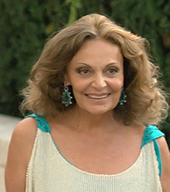 Diane von Fürstenberg. (Photo courtesy of David Shankbone, Flickr.) Diane von Fürstenberg. (Photo courtesy of David Shankbone, Flickr.) Diane von Fürstenberg may have been a princess, but it’s her work in fashion, bringing comfort and style to working women, that made her an icon. Diane’s signature wrap dress transformed the way women dressed, and ultimately made her into one of the most successful designers in our time.
Diane’s Beginning The designer was born in Brussels, Belgium on New Year’s Eve in 1946. Diane grew up in a comfortable home with her parents Leon and Liliane Nahmias Halfin. Liana survived after being held at a Nazi concentration camp during World War II and raised Diane to be confident and not succumb to fear. Diane attended finishing schools in Spain, England and Switzerland and attended Madrid University before transferring to the University of Geneva in 1966 to study economics. Falling in Love and Becoming a Princess At the University of Geneva, Diane met Prince Eduard Egon von Furstenberg, a German socialite and aristocrat who was heir to the Fiat fortune. The two fell in love and married in 1969. That same year, the couple moved to New York City. Despite the fact that Diane was now a princess and really had no need to work, she was determined to not be defined by simply her title and state. In a 1977 interview with the New York Times, Diane said, "The minute I knew I was about to be Egon's wife, I decided to have a career. I wanted to be someone of my own, and not just a plain little girl who got married beyond her desserts.” And that she did. Diane’s Career and the Creation of her Iconic Wrap Dress With little experience, Diane began working on a clothing line from her dining room table in her Park Avenue apartment. By 1970, she was already showing her first collection and just two years later the designer had her own manufacturing business. But, it was in 1974 when Diane introduced her iconic, jersey knit “wrap” dress, which launched her clothing line and career to be featured on the front of well known and respected publications like Newsweek and The Wall Street Journal. The dress changed women's apparel in the office by presenting a comfortable and adaptable wardrobe solution that could be worn in and outside of the office. Soon she launched her own perfume line too. Unfortunately, Diane’s personal life began crumbling at the same time her career took off. She and her husband separated in 1975 and ultimately divorced in 1983. Facing financial troubles, Diane moved to Paris where she established a French publishing house. Along the way she started several other businesses in cosmetics and in the early 1990s sold Silk Assets on the QVC shopping channel, a sale that helped her move back to the U.S. and eventually relaunch her company in 1997. Lasting Contribution Diane’s perseverance and determination to contribute influenced how half of the workforce has dressed for decades. She’s also shared her story by publishing an autobiography and memoirs and she continues to give back to others. Diane serves as the director of The Diller - von Fürstenberg Family Foundation, which supports nonprofits helping to provide community building, arts and education, human rights and more. |
Archives
July 2017
Categories
All
|
 RSS Feed